
Written by Alessandro Farfalletta
In June, SpaceX went public on Nasdaq with a $75bn IPO, the largest ever at the time.
On 18/11/2026 Anthropic raised $81.3bn and took the record (Renaissance Capital). Both deals came in a nervous market: the Nasdaq fell into a correction in early November on worries about AI spending (Reuters), and the Fed is raising rates again (AP).
For private equity, the real question is what this means for exits, valuations and liquidity. We discussed it on 26/11/2026 with John Doe, a Principal in the secondaries team of a London-based private markets firm. Our guest studied Finance at Bocconi, and worked in Leveraged Finance and ECM at a US bank in London before moving to secondaries in 2021.
How did you end up in secondaries, and what does the job look like day to day?
Almost by chance. In LevFin I worked on a few financings for continuation funds, and I found that side of the market more interesting than the deals themselves. In secondaries we buy stakes in private funds, or in single companies, from investors who need liquidity. Day to day it’s a lot of pricing. Sometimes we look at a portfolio of 150 companies in a few weeks, so you get used to working with incomplete information. The market has grown very fast: volume reached a record $240bn in 2025, and the first half of 2026 set another record at $118bn (Jefferies). We’re basically where private equity comes when exits take too long.
SpaceX now trades below its $135 IPO price. Who actually made money on that deal?
Mostly the people who were already in. If you adjust for the 5-for-1 split SpaceX did in May, the December 2025 insider sale was at $84.2 per share and the xAI merger in February at $105.3 (Reuters; Bloomberg). So someone who bought last December was up about 60% at the IPO price. IPO buyers had a very different ride. The stock went as high as $225.6 and as low as $104.8 (Quartz), and it closed at $127.8 on 20/11/2026 (Admiral Markets).
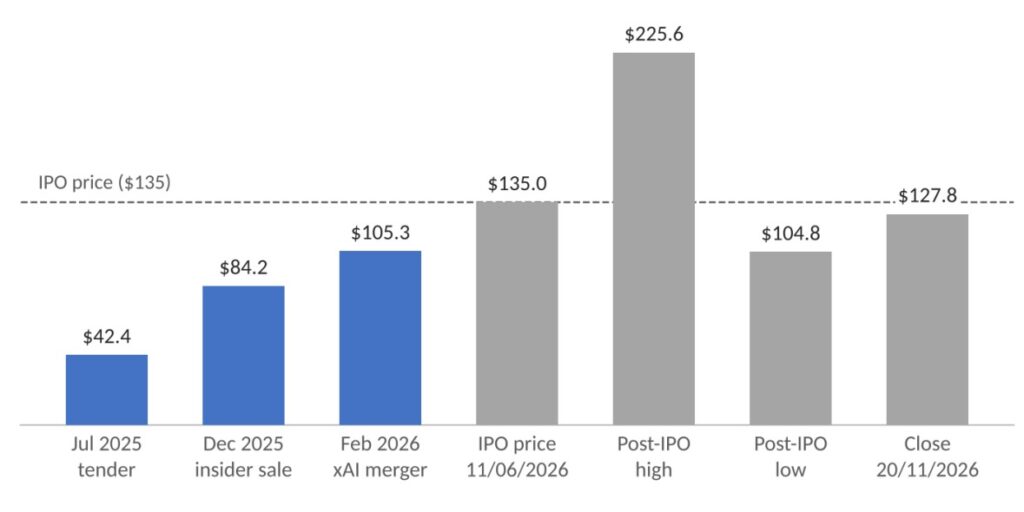
Figure 1: SpaceX price per share at private transactions and after the IPO, adjusted for the 5-for-1 split of May 2026 ($). Sources: Fortune, Reuters, Bloomberg, Quartz, Admiral Markets.
I don’t think anyone did anything wrong. When a company stays private for more than twenty years, most of the value is created before the listing. Our problem is that everyone knows this now, so it’s hard to find discounts on the best pre-IPO names. The next test is 08/12/2026, when the main lockup expires (Quartz).
Anthropic priced above its range in the middle of a sell-off. Who was buying, and what did they get?
Long-only funds that had no way to own a frontier AI lab before, and index money, which now arrives quickly: since May, Nasdaq lets very large new listings join the Nasdaq-100 after 15 trading days (Quartz). One detail stood out to me, though. Next to the $81.3bn IPO there was a $26bn private placement at the same price (Reuters), and Nvidia alone has now invested $20bn in the company (Al Jazeera). When your chip supplier is also a big shareholder, part of the demand isn’t purely financial.
As for what they got: very fast growth, with revenue of $33.2bn in the first nine months of 2026, thirteen times the year before, but also $895.4bn of compute and infrastructure commitments, $69.8bn of them due within a year (Renaissance Capital). In an LBO we would treat contracts like these almost as debt, a bit like airline leases before IFRS 16. And a trust elects four of the seven directors (CLS Blue Sky Blog). In private equity we would never put money in without some control. Here investors put in $81.3bn with very little.
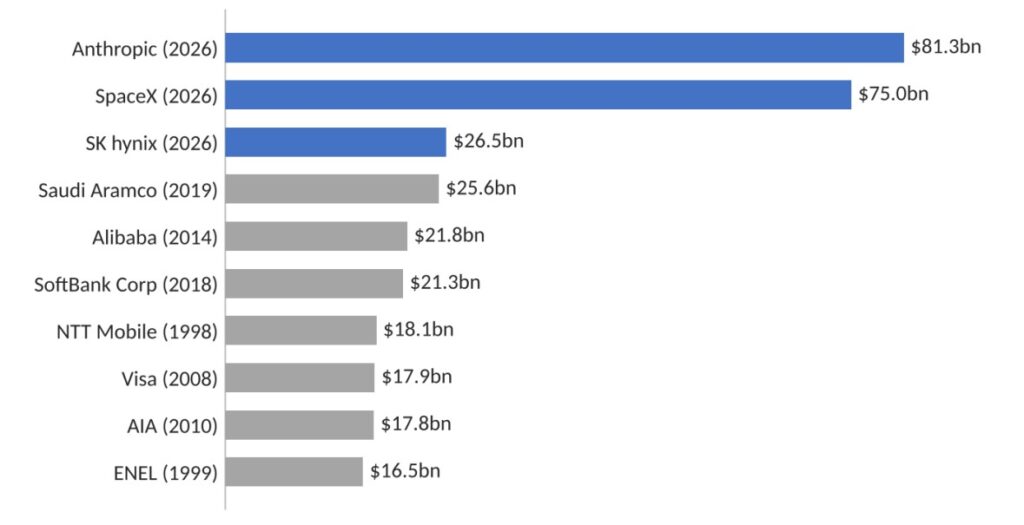
Figure 2: Largest IPOs in history by base deal size, excluding over-allotment ($bn). Source: Renaissance Capital.
Nvidia’s CEO resigned on 12/11/2026 and was reinstated eleven days later (Nvidia). How do you think about key-person risk?
I’ll leave the personal story aside. What I found interesting is that the market tried to put a price on one person. The shares fell as much as 14% on the morning he resigned (The San Francisco
Standard), and Dan Ives said the stock was worth $300 with Huang and $225 without him
(Stocktwits). That’s a 25% discount for one man, at one of the most valuable companies in the world. Then he came back and told employees that Nvidia doesn’t need a succession plan (CNBC). As an investor, I’d struggle with that.
In Italy we see the same issue on a smaller scale all the time. About two thirds of Italian companies with at least €20m of revenue are family-controlled (Bocconi University), and a third of them could change leader between 2025 and 2034 (Osservatorio AUB). Often the founder is the company. So before we invest, we ask the founder to reinvest, we bring in a second line of managers and we agree on a succession plan.
Private credit is exposed to AI in two ways: it lends to build it, and it has lent a lot to software companies that AI could disrupt. Which worries you more?
The software side, because it’s bigger and it’s already in the portfolios. Loans from private credit funds to software companies went from about $8bn in 2015 to more than $500bn at the end of 2025, or 19% of all direct loans (BIS). Most of those deals were done when nobody priced AI as a risk.
Software stocks fell by almost 30% between October 2025 and February 2026 (BIS), and in April Blue
Owl capped redemptions in two large funds after investors asked for more than $5bn back (Yahoo Finance). With the Fed raising rates again since September (AP), floating-rate borrowers are squeezed from both sides.
The infrastructure side is newer. SpaceX’s $40bn GPU financing included $32bn of bonds, and according to the FT the lenders didn’t want the chips securing the debt to be launched into orbit, because they couldn’t repossess them (Yahoo Finance). It sounds like a joke, but the real issue is depreciation. One appraiser expects a used H100 to be worth only 5-7% of its list price by 2028 in a conservative case (American Compute), while these financings run for five years.
With so many companies stuck in portfolios, are continuation vehicles a solution or just a way to buy time?
A bit of both. The problem is real: buyout funds hold around 32,000 unsold companies worth $3.8tn, and distributions as a share of NAV have been below 15% for four years in a row (Bain & Company). The IPO market won’t fix that. Medline, the largest PE-backed IPO ever, raised $6.3bn in December 2025 (Reuters), less than a tenth of SpaceX.
So continuation vehicles have become a normal exit route, with GP-led volume at $115bn in 2025
(Jefferies). The research is more positive than people think: an NBER study of 472 continuation funds found no evidence that managers move their worst assets into them. But only about 5.7% of existing LPs roll over (NBER), so for most investors it’s simply a sale at a price the manager helped set. When we look at one, we check whether the GP rolls most of its carry, whether the price was tested with other buyers and whether there is a real exit plan. I’m less comfortable with the new “forever” vehicles that would hold a company for 10 to 15 years (Bloomberg).
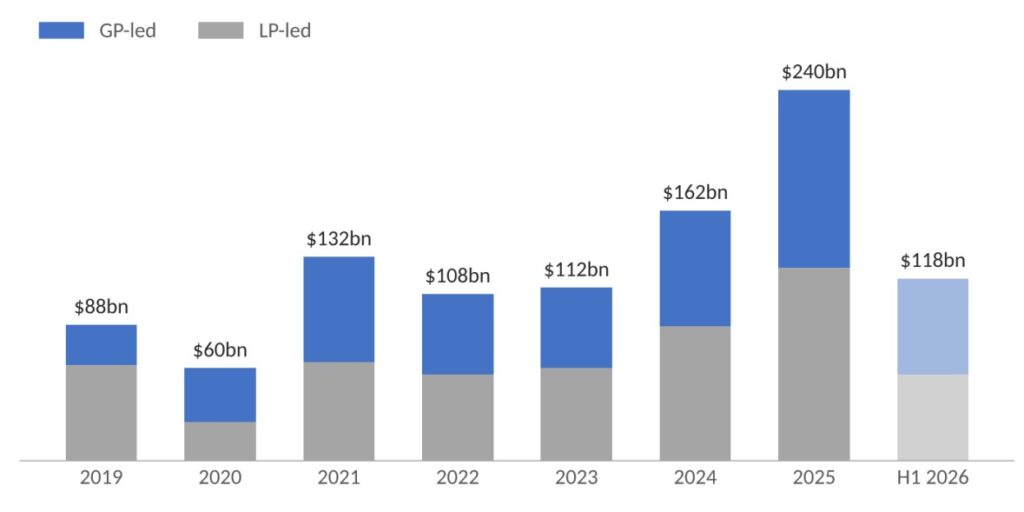
Figure 3: Global secondary market volume by type ($bn). Source: Jefferies Global Secondary Market Review.
Last question. AI can build a financial model in minutes now. What should BSPEC members focus on?
Reading and people, mostly. Returns in this industry now have to come from operations. Bain’s rule of thumb is that “12 is the new 5”: deals need much faster EBITDA growth than a decade ago to reach the same returns (Bain & Company). A spreadsheet doesn’t give you that.
My practical advice is to pick one of this year’s prospectuses, SpaceX or Anthropic, and read it properly. Anthropic’s runs to more than 300 pages (Al Jazeera). You learn more about accounting, governance and capital structure there than in most courses, and then you can compare it with what the press wrote. And spend time with people. A model can’t sit down with a 72-year-old founder in Brescia and convince him to let someone else run his company, and that’s still how a lot of deals in Italy happen.
Sources
Admiral Markets, https://admiralmarkets.com/analytics/traders–blog/spacex–stock–below–ipo–price–analyst–price–targets
Al Jazeera, https://www.aljazeera.com/economy/2026/11/19/anthropic–starts–trading–in–the–us–after–blockbuster–ipo
American Compute, https://www.amcompute.com/appraisals/h100
AP, https://www.adn.com/business–economy/2026/11/18/fed–minutes–higher–interest–rates–needed–in–december–asinflation–worries–mount/
Bain & Company, https://www.bain.com/about/media–center/press–releases/2026/private–equity–resurgence–gatherssteam–as–new–era–challenges–firms–to–enhance–value–creationbain—company–global–pe–report/
BIS, https://www.bis.org/publ/qtrpdf/r_qt2603v.htm
Bloomberg, https://news.bgov.com/banking–law/goldman–evercore–are–pitching–forever–funds–to–private–equity Bloomberg, https://bloomberg.com/news/articles/2026–05–16/spacex–shareholders–approve–5–for–1–split–of–commonstock
Bocconi University, https://www.unibocconi.it/it/news/come–cambia–la–leadership–delle–imprese–familiari–italiane
CLS Blue Sky Blog, https://clsbluesky.law.columbia.edu/2026/10/02/public–purpose–and–founder–control–at–anthropic/
CNBC, https://www.cnbc.com/2026/11/24/jensen–huang–nvidia–employee–meeting.html
Fortune, https://fortune.com/2025/12/13/spacex–ipo–plan–2026–secondary–offering–insider–share–sale–800–billionvaluation/
Jefferies, https://www.jefferies.com/insights/the–big–picture/2025–global–secondary–market–review–another–recordbreaking–year/
Jefferies, https://www.jefferies.com/wp–content/uploads/sites/4/2026/07/Jefferies–Global–Secondary–Market–Review–July2026.pdf
Jefferies, https://jefferies.com/wp–content/uploads/sites/4/2025/02/Jefferies–Global–Secondary–Market–Review–January2025.pdf
NBER, https://www.nber.org/system/files/working_papers/w34471/w34471.pdf
Nvidia, https://nvidianews.nvidia.com/news/nvidia–board–reinstates–jensen–huang–as–president–ceo–and–board–director Osservatorio AUB, https://www.teleborsa.it/News/2026/10/27/imprese–a–controllo–familiare–all–80–9percent–1–4percentaffida–gestione–a–un–manager–127.html
Quartz, https://qz.com/spcx–stock–debut–price–swings–lockup
Quartz, https://qz.com/spacex–ipo–lock–up–structure–insider–shares–052126
Renaissance Capital, https://www.renaissancecapital.com/IPO–Center/Stats/Largest–Global–IPOs
Renaissance Capital, https://www.renaissancecapital.com/IPO–Center/News/122533/Anthropic–discloses–third–quarterfinancial–results–ahead–of–multibillion–d
Reuters, https://www.thestar.com.my/tech/tech–news/2026/11/19/anthropic–prices–blockbuster–ipo–at–83–a–share–sourcesays
Reuters, https://www.business–standard.com/world–news/spacex–prepares–for–ipo–insider–share–sale–sets–800–billionvaluation–125121300285_1.html
Reuters, https://gvwire.com/2026/11/05/nasdaq–set–to–confirm–correction–as–ai–spending–worries–mount/
Reuters, https://www.thestar.com.my/business/business–news/2025/12/19/medline–soars–41–in–nasdaq–debut
Stocktwits, https://stocktwits.com/news–articles/markets/equity/nvda–stock–hit–lowest–level–in–a–year–dan–ives–valuesnvidia–at–225–without–jensen–huang/cNGzMuWR9aO
The San Francisco Standard, https://sfstandard.com/2026/11/12/nvidia–shares–tumble–as–wall–street–reacts–huang–s–exit/
Yahoo Finance, https://finance.yahoo.com/markets/stocks/articles/spacex–falls–5–breaks–below–145235801.html
Yahoo Finance, https://finance.yahoo.com/markets/stocks/articles/private–credit–faces–2–distinct–181852402.html

Comments are closed.